
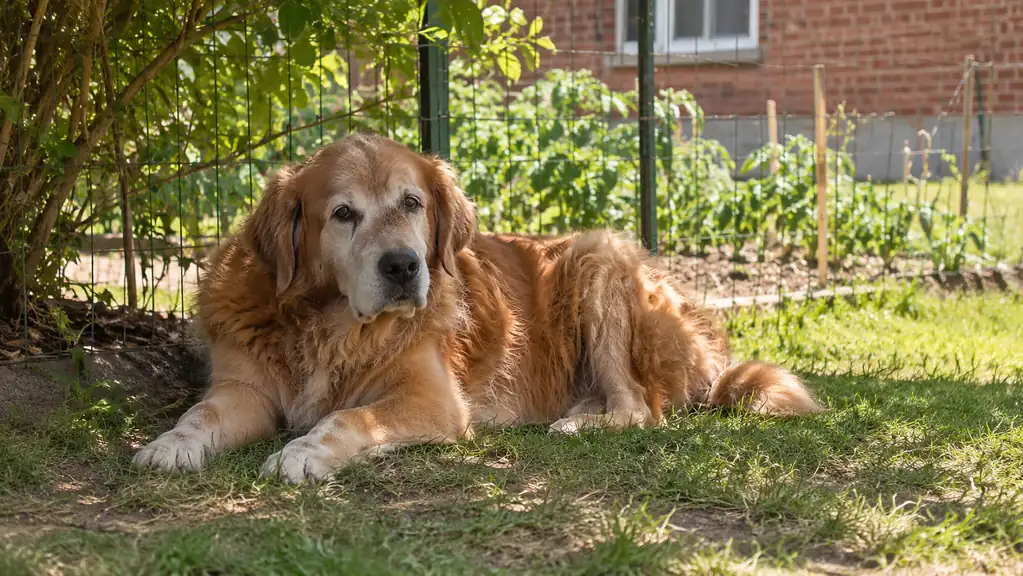
I started pumping Native Pet Omega 3 Fish Oil over Hazel's breakfast in March 2026. That makes it eight months now, which is longer than I have stuck with anything else I bought for her, and I have bought a few things. Hazel is a ten-year-old Golden Retriever, sixty-four pounds, and she turned ten in April. I ordered the eight ounce bottle myself on Amazon after I asked Dr. Patel at our clinic here in Aiken whether it was worth trying. I ask her about everything that goes in that bowl.
What I wanted from it was not complicated. I wanted her coat to stop looking dull, and I wanted to feel like I was doing something about the joints I cannot see. The Native Pet listing names skin, coat and joints, and it names two wild-caught fish sources and nothing else. I have been marketed to for sixty-one years and I am wary of a label that promises the world, so I read this one twice before I ordered.
The Quick Verdict
Two named fish sources, a pump that measures without a spoon, and a coat change I could see with my own eyes. The joint side I cannot prove, and I will not pretend otherwise.
Amazon Check Today's Price →Two fish in a bottle, and a dog who licks the bowl clean
Wild-caught Alaskan salmon oil and wild-caught pollock oil, nothing else per the label, in an eight ounce pump bottle that lives in my kitchen cabinet. The full ingredient list and today's price are on the listing.
Amazon Check Today's Price on Amazon →How I've Used It
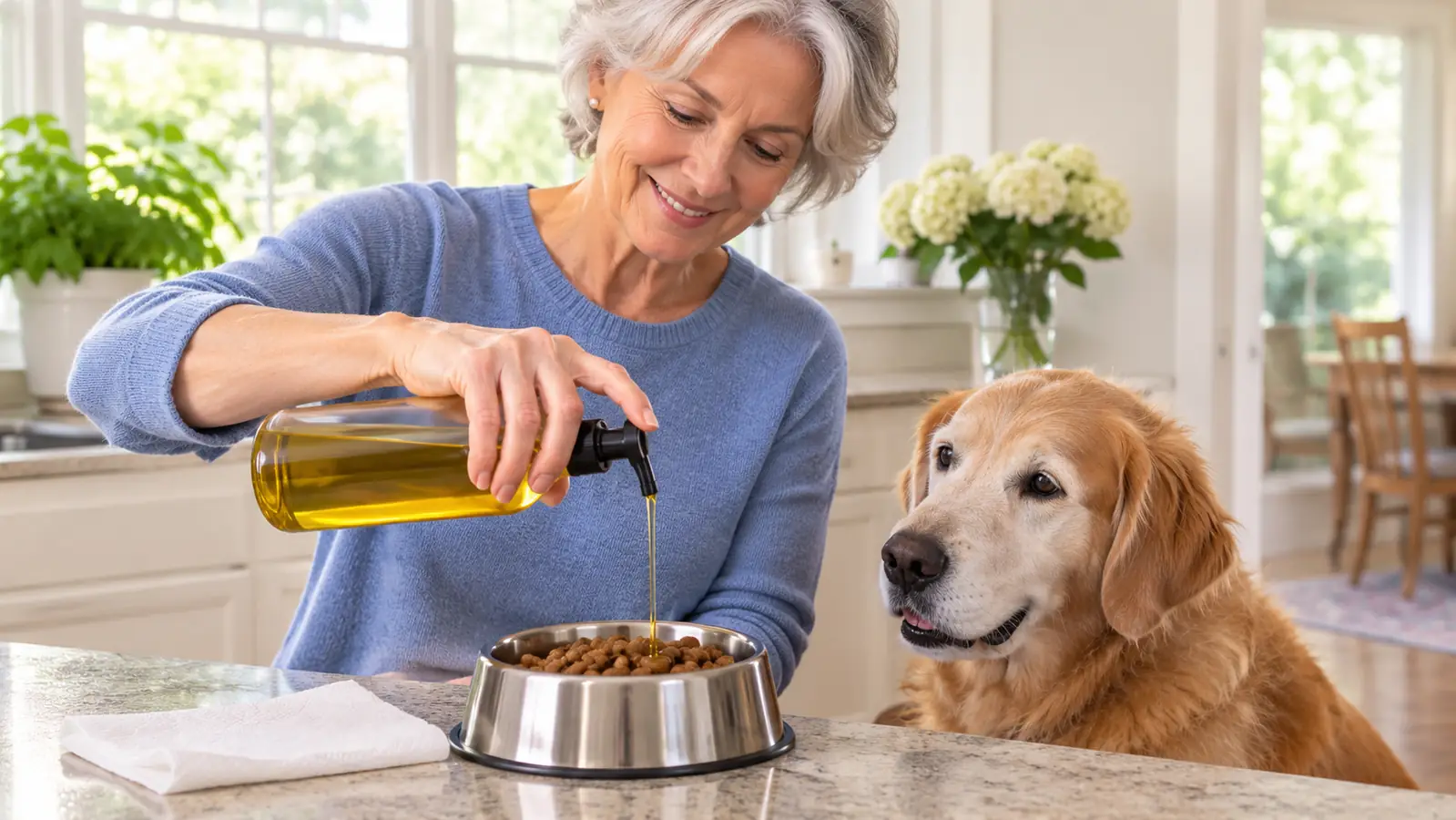
The bottle lives in the cabinet above the microwave, which is the coolest spot in my kitchen that is not the refrigerator. Eight ounces is small enough that it does not crowd the shelf, and it came with a pump rather than a cap. Every morning I pump it over her kibble, stir it in with a fork, and set the bowl down. Then I wipe the nozzle with a paper towel, because if I skip that step it drips down the side of the bottle and onto the shelf by the next morning.
The pump itself I like more than I expected to. A cap and a measuring spoon would mean a sticky spoon sitting in the dish rack and me eyeballing the amount with my reading glasses on. The pump gives the same amount each time and my hands stay out of the bottle. That sounds like a small thing until you have done it the other way for a month.
The first morning I gave it to her was a Tuesday, and I made a mess of it. I pumped twice onto the same spot in the bowl, so half her kibble was slick and half of it was dry, and she nosed around the dry side first before she ever got to the wet. It took me about a week to work out that a fork is the whole trick: pump, stir, done. Now the kibble is evenly coated by the time I set the bowl down and there is nothing left for her to investigate.
The label gives a serving based on the dog's weight. For Hazel at sixty-four pounds I use what the label calls for, and Dr. Patel went over it with me before I started. I am not going to hand out a number for your dog. Read the bottle and call your vet, especially if your dog takes medication or has a diagnosis you are already managing. That is not me being cagey. That is me knowing exactly what I am not.
The other thing I watch is the date. Once a bottle is open I write the month on the cap with a marker and keep an eye on it, and I do not buy two at a time. Eight ounces lasted us a good stretch at her serving, but I would rather start a fresh bottle than have one sitting in the cabinet going stale. Dale thinks I am fussy about it. Dale also leaves the nozzle dirty, so he can keep his opinions.
I add one thing at a time and then I wait. That is a rule I made for myself, because when you change three things in a week you learn nothing except that you spent money. The oil went in on its own in March. I watched her for the first week for any change in her appetite or her stool, saw none, and then stopped watching and just gave it to her.
She cleans the bowl. Hazel is a Golden Retriever, so enthusiasm about food is not news, but there is a difference between a dog who eats and a dog who goes back to check whether something was missed underneath. With the oil on top she does the second one. It has made breakfast the easiest part of her day, and it means I am not hiding a pill in a slice of cheese and hoping.
What the Label Actually Says
This is the part I check first with any oil. The active ingredients on the listing are wild-caught salmon oil and wild-caught pollock oil. That is the whole list. No filler oil, no flavouring to hide behind. The product benefits the listing names are skin care, coat, joint health, immune support and antioxidant, and the specific uses it lists are coat, heart, joints and skin. It also mentions omega 3 and omega 6 fatty acids.
I am not a veterinarian and I am not going to explain fatty acids to you like I am one. What I can tell you is that a two ingredient oil is easier for me to feel all right about than a bottle with a paragraph of things I cannot pronounce, and it is easier to know what to blame if something goes sideways. The listing says all breed sizes. The bottle measures 3 by 2.2 by 5.75 inches, which is smaller than I expected when the box came.
Something I did not expect: the bottle is small enough that the label wraps tight around it and the print is fine, so the first time I read it I had my reading glasses on under the kitchen light. The listing on my phone was easier to read than the bottle, honestly, and I had already been through the ingredient line twice before I ordered. The Native Pet bottle matched what I had read, which is not always the case with these things. If your eyes are like mine, read it on the listing first and then check the bottle against it when the box comes.
I did compare it to the plain salmon oils at the feed store and the big box, standing in the aisle reading labels. Most of those are one fish. This one is two, the listing says wild-caught on both, and it says nothing else is in the bottle. I have never owned a single-source salmon oil, so I am not going to tell you which is better. I can tell you why I picked this one. Two sources, a short list, and a pump instead of a cap I would lose.
By the middle of April the brush was coming away with less fur than it had in February, and I had changed nothing else that month.
The Coat Is Where I Saw It First
I brush Hazel on the back porch most afternoons when the weather is decent. For the first couple of weeks I did not notice anything, and I told myself not to go looking for it. Then sometime in the second month, brushing her, I realized the brush was coming away with less fur than it had in February, and the coat along her back had a shine to it that I had not seen in a while. She is ten. I had gotten used to dull without realizing I had.
In early May I brushed her on the porch while the light was good and I could finally see it plainly. The undercoat that came away in the brush was a lighter, fluffier pile than the wiry bits I had been getting in February, and the hair along her spine lay flat instead of standing up any which way. I know how that sounds. It is a small thing to notice, and it took me eight or nine weeks to notice it. But it was the one change that whole spring I did not have to talk myself into.
That is the whole of what I can claim, and it is not a dramatic before and after. I did not take pictures beforehand, which I regret now. The Native Pet listing names coat and skin, and coat is the one place I saw something with my own eyes. Less fur in the brush and a better shine to the back. If you are expecting more than that, you will be disappointed, and I would rather say so on the front end than have you find out in March.
What I Can't Tell You About Her Joints
The joint side is murkier and I am going to be straight with you about it. Hazel takes three things now. A chew with breakfast, this oil over the same breakfast, and a mussel bite in the evening after our short walk. With three things going in, I cannot tell you which one does what. Anyone who says they can is either testing more carefully than I am or selling something.
What I can tell you is that she is still an older dog who is slower than she used to be. On cold, damp mornings she is stiff, and that has not changed since the fall. She takes the two brick steps down to the garden one at a time and always has, since that first morning in September 2025 when she stood at the bottom of them and thought about it. The oil did not make her a puppy again. What I wanted was to feel like I was covering a base, and the listing naming joints is why I picked this bottle instead of the plain salmon oil I had been looking at.
The Small Annoyances
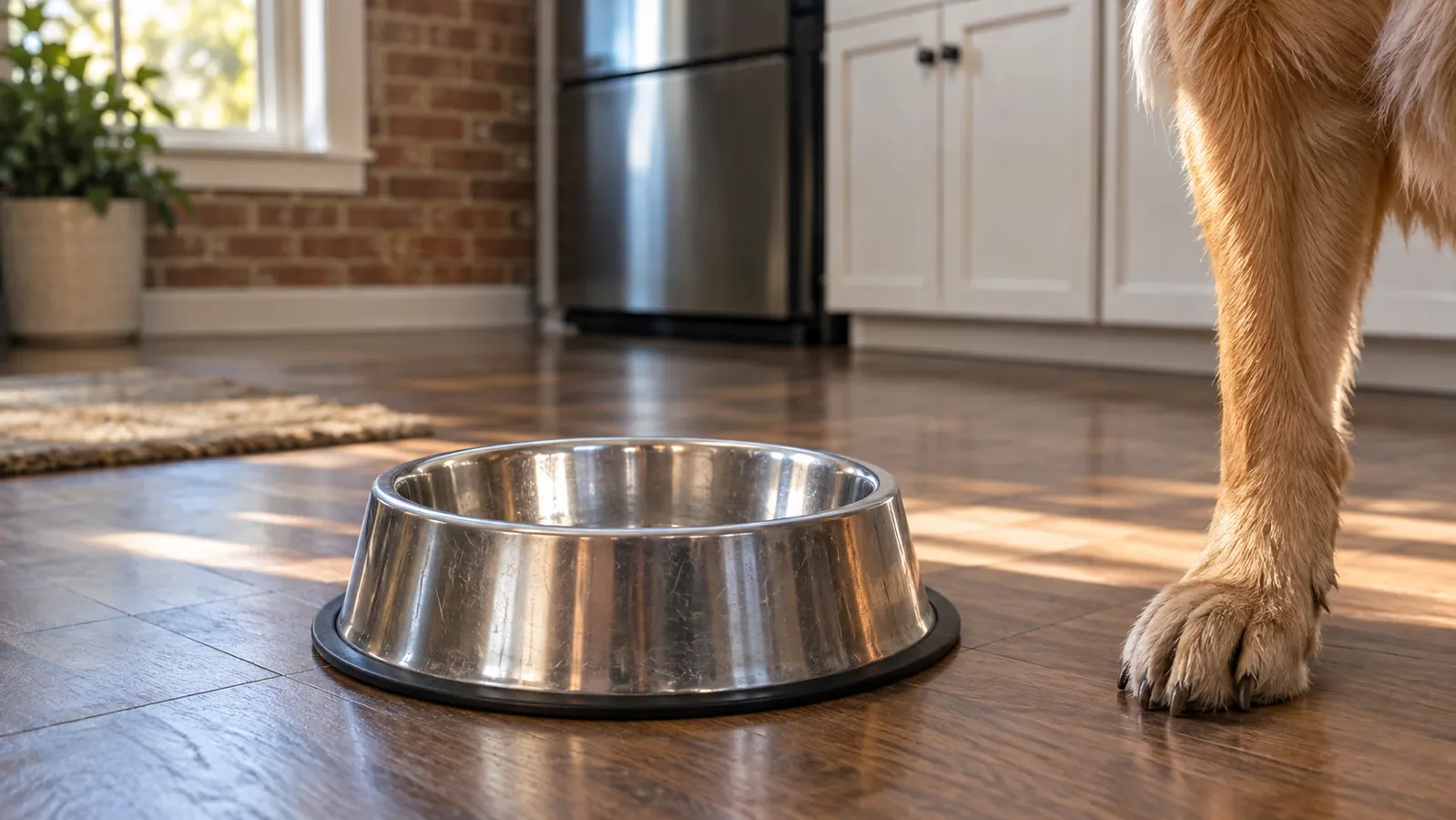
It smells like fish. That is not a flaw, it is what fish oil is, but you should know it before you open the bottle in a small kitchen. It gets on your hands when you wipe the nozzle, and the bowl smells after she is done, so it goes straight into the dishwasher instead of sitting in the sink. If I pump it and walk away, the drip lands on the shelf. None of this is a reason not to buy it. It is a reason to keep a paper towel beside the bottle.
The other thing nobody told me: the first week, her breath smelled like a fish market. It settled down after that, or maybe I stopped noticing, but those first few mornings when she came over to say good morning I leaned back a little. That is a real thing about an oil poured on the food, and it is worth knowing before you set the bottle down in a kitchen you also eat in.
One more thing about storage, because it is hot and sticky here in the summer and that matters with an oil. The cabinet above the microwave stays steady. I would not keep this bottle on the counter by a window, and I would not keep it in the door of the refrigerator where it gets knocked around every time somebody wants milk. Cool, dark, upright, nozzle wiped. That is the entire system and it takes me about four seconds.
What I Liked
- Two named fish sources and nothing else on the active ingredient list
- The pump measures without a spoon and keeps my hands out of the bottle
- Hazel licks the bowl clean, so there is no coaxing at breakfast
- Her coat had a shine again by the second month and the brush held less fur
- Eight ounces went a good stretch at her serving
- No change in her appetite or her stool the week she started
Where It Falls Short
- It smells fishy on my hands and in the bowl
- The pump drips onto the shelf if I do not wipe the nozzle
- Needs a cool cabinet and a date written on the cap once it is open
- Any joint change is something I cannot pin on this bottle with three supplements in her bowl
- It is one small thing, not a plan for an older dog
Who This Is For
This is for the owner of an older dog who has already handled the obvious things and wants one small, simple addition to breakfast. It is for someone who reads a label and prefers a short one, which is exactly why the Native Pet bottle ended up in my cabinet and not something with a paragraph of print on the back. If your dog's coat has gone dull and you want to find out whether an oil changes that, this is a reasonable place to start, and it is the one change in my house that I could see. It is also for someone willing to give it a couple of months before deciding anything. Nothing about a ten-year-old dog happens overnight, and I would be lying if I said otherwise.
Who Should Skip It
Skip it if you are looking for something to fix a joint problem. This is not that, and a bottle of oil is not a diagnosis. Talk to your vet about what your dog actually needs, because there are real options out there and I am not the person to sort them for you. Skip it if your dog has a sensitive stomach or has ever reacted badly to fish, and if there is any medication in the picture, ask before you start rather than after.
And skip it if what you want is for me to tell you it will do for your dog what it did for mine. I cannot. She is one dog, I am one woman with a paper towel, and I am not a vet. What I have is eight months of watching, a bottle I keep buying, and a coat that looks better than it did in February.
I still buy it. That is the short version. Eight months in, the bottle sits above the microwave, the nozzle is wiped, and Hazel's bowl comes back clean every morning. It did not change her life and I never asked it to. It is one small thing I could actually see working, in a routine where most of what I do is watch and hope.
The one thing in Hazel's bowl I could see working
If you want to start somewhere small with an older dog, read the label first and call your vet, then look at the listing. That is the order I did it in, and I would do it the same way again.
Amazon See the Native Pet Fish Oil on Amazon →