
Here is the short answer before the long one. Native Pet Omega 3 Fish Oil is a blend of two wild-caught fish, Alaskan salmon oil and pollock oil, in an eight ounce bottle that ships with a pump. A plain single-source salmon oil is one fish and nothing else, usually sold in more sizes under any of a dozen labels. Both are oils you pump or pour over kibble. The real difference is on the back of the bottle: one listing names two fish and says zero fillers, the other names one fish. Which one belongs in your kitchen depends on what your dog has already eaten and how much label reading you want to do at nine o'clock at night.
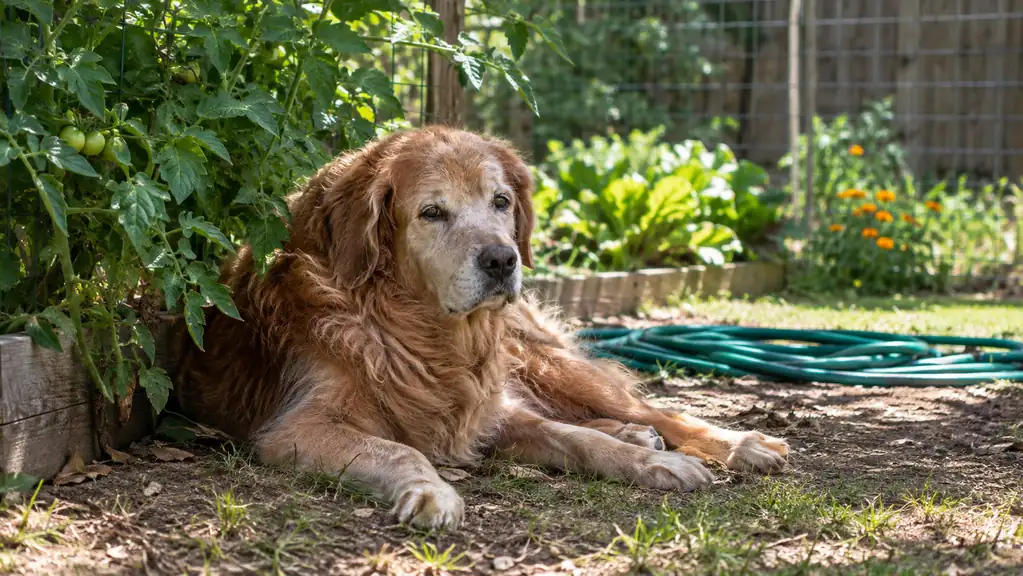
I am not a vet and I am not going to pretend to be one. I am 61, retired from a church office in Aiken, South Carolina, and I have one dog. Hazel is a Golden Retriever who turned ten in April 2026 and weighs 64 pounds. I started her on Native Pet fish oil in March 2026 after asking Dr. Patel at our regular clinic about it first. I have never bought a plain single-source salmon oil, so I am not going to tell you how one performed in my house. What I can do is put the two listings side by side, tell you what each one actually says, and tell you what eight months of the bottle I did buy has looked like.
| Native Pet Omega 3 Fish Oil | Single-source salmon oil | |
|---|---|---|
| Fish sources | Two wild-caught sources: Alaskan salmon oil and pollock oil | One source: salmon |
| What else is in the bottle | The two oils, nothing else per the listing | The one oil, nothing else |
| Pump in the box | The eight ounce bottle ships with a pump | Varies by brand; some ship with one, some do not |
| Serving guidance | The label gives a serving by body weight and points you to the full guidelines | Set by each brand; read that label, not this one |
| Bottle sizes | Eight ounces | Often several sizes, up to large jugs |
| If pollock is a question for your dog | Pollock is in the blend, so it is not the right bottle | Salmon only, nothing to sort out |
| Finding it in a store | One listing, one size; I ordered mine | Farm supply stores, pet shops and several sites |
| Smell and cleanup | Fishy on the hands and the bowl; the pump drips if you do not wipe it | Also fishy, same wiping |
How I Ended Up With Two Fish Oil Labels on My Kitchen Table
The morning this started was in September 2025. Hazel took a long time getting up off the kitchen floor, and then she stood at the bottom of the two brick steps out back and looked at them before she went up. She had done those steps ten thousand times without thinking about them. I asked Dr. Patel about it, and about every supplement I have added since, one at a time, never two at once. Dasuquin came first, in October 2025. The non-slip socks came in November, the bed in January 2026, and the fish oil in March. The mussel bites came in May. I have never been able to point at one of those and say that one did it, and I have stopped trying.
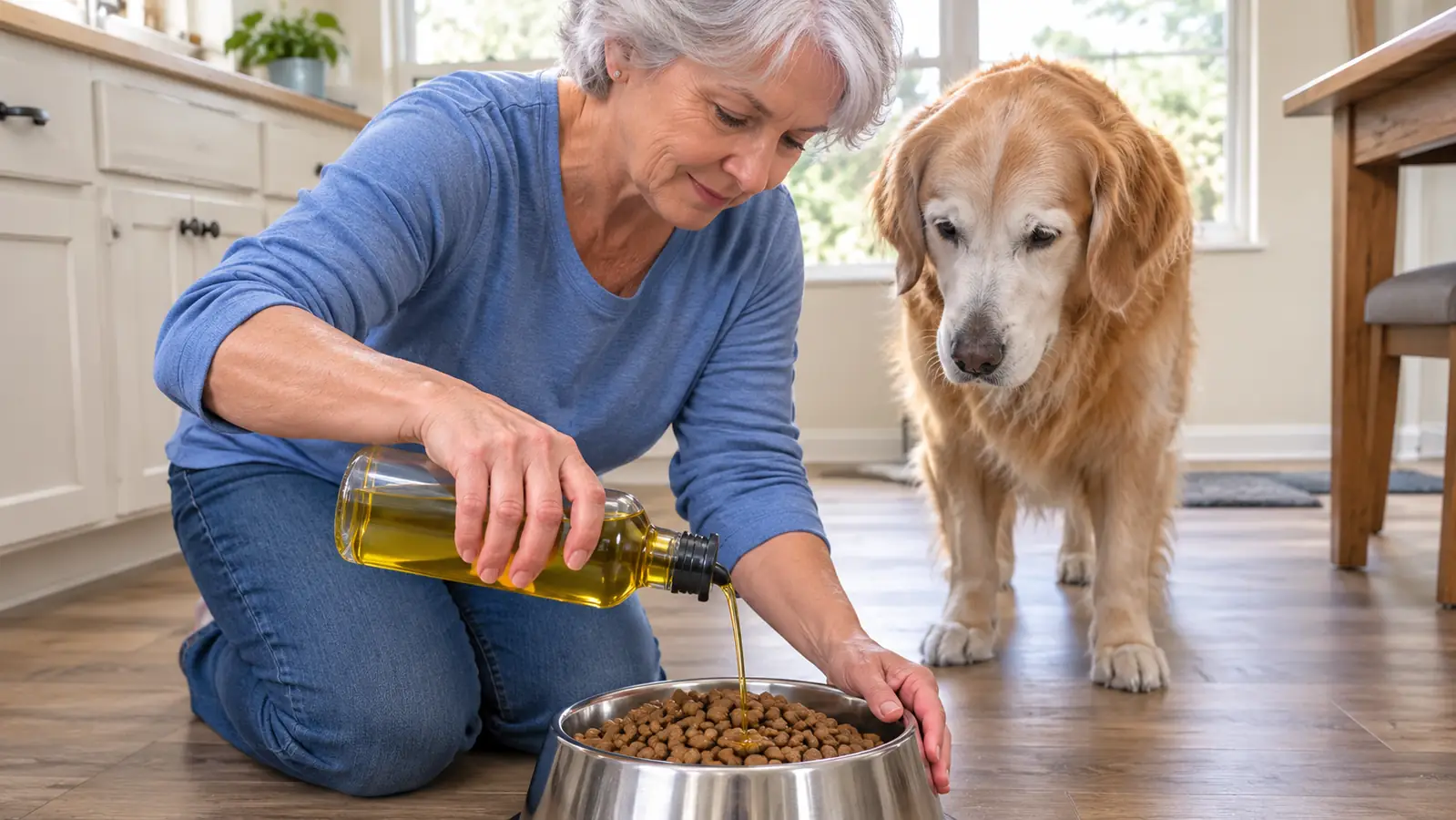
By the time I got to the oil I was tired of labels. What I wanted was something I could pump over her breakfast kibble without a fight. Hazel is not a fussy dog, but she is ten, and I have learned not to ruin a meal she actually finishes. The serving is the amount on the label for her weight, Dr. Patel signed off on it, and that is the end of my advice on dosing. The bottle lives in a cool cabinet beside the flour. I pump it, wipe the spout, and put it back. She licks the bowl clean.
One thing about how I read these two products. Everything I say about a plain single-source salmon oil comes from listings and labels on the shelf, not from my kitchen. I have not fed one to Hazel, so when I say a salmon oil comes in more sizes, that is me reading labels and store shelves, not me reporting on my own dog. What I can speak to is the bottle I bought, what it says it is, and what I have seen in a 64 pound Golden Retriever over eight months. That is the whole of my authority here and I am not going to stretch it.
Where Native Pet Wins
Where Native Pet wins, in my reading, is in the small details you notice after a week. The listing names two wild-caught sources, Alaskan salmon oil and pollock oil, and says zero fillers. I cannot prove what is in the bottle beyond what the label says, and neither can you, but two named fish tells you more than an unnamed one. The eight ounce bottle ships with a pump, which sounds like nothing until you have tried to drizzle oil out of a jug over a bowl with a dog underfoot. And the label gives a serving by body weight and sends you to the full guidelines, which I read, and then I had Dr. Patel check it against Hazel.
The other place it wins is plain language. The listing names skin, coat and joints, and it names omega 3 and 6 fatty acids, without making you decode anything. That matters less than what your own vet says, and I mean that sincerely. But when you are standing in your kitchen at nine at night with two bottles and a pair of reading glasses, plain language is worth something. Eight months in, her coat looks glossier and her bowl is clean every morning. The joint part I will get to, because I am not handing that to a bottle.
Where a Single-Source Salmon Oil Wins
A plain single-source salmon oil wins exactly where the blend cannot: it is one fish. If your dog has ever had a bad week on a food or a treat with pollock in it, or if your vet has asked you to keep the ingredient list short while you sort something out, a salmon-only bottle is the simpler read. There is nothing to untangle on the back label. One ingredient, one source, one line. For a dog with a touchy stomach or a long list of things already ruled out, that simplicity is worth more than a second fish, and no blend can offer it.
The other place salmon oil wins is the shelf. You can find it in more sizes, from small bottles to big ones, and in more places: the farm supply store out on the highway, the pet shop, several sites online. I ordered the Native Pet bottle from Amazon because that is where I buy most things, and it arrived in a few days, but eight ounces is eight ounces. If you want to hold a bottle before you buy it, or you want a size that lasts more than a couple of months with a big dog, a single-source salmon oil gives you more to choose from. That is a real advantage and I am not going to pretend otherwise.
The bottle I have been pumping over Hazel's breakfast since March
Two wild-caught fish, a pump in the box, and a label that gives the serving by body weight. Read that label, then ask your vet about your own dog before you start.
Amazon Check Today's Price on Amazon →Her coat looked glossier within a month or so. The joint part I cannot hand to the oil, and I am not going to pretend I can.

What Both Labels Agree On
Strip away the brand names and both products are saying the same thing. Fish oil is fat, it goes on food, it should be kept cool and used up, and it is not a medicine. Neither bottle promises anything you can measure in a week. Both are meant to be part of a diet, not a replacement for one, and neither one is going to take the place of whatever your vet has already told you to do. If you are looking for something that works like a pill you give once and forget, fish oil in any form is going to disappoint you.
They also agree on the fine print that nobody reads. Watch the date once the bottle is open. Keep it out of a warm cabinet over the stove. Wipe the spout. Do not leave the bottle sitting in sunlight on a windowsill, which sounds obvious until you have done it with something else. And do not double up. If you are already feeding a salmon oil and you add a salmon and pollock blend on top, you are guessing at how much fish oil your dog is actually getting in a day. That is a question for your vet, not for a review.
What Neither Label Tells You
Neither label tells you what the bottle is like to live with. This one smells like what it is. My hands smell fishy after I pump it, the bowl smells fishy after she eats, and the pump drips a little if I do not wipe the spout with a paper towel. I keep the bottle in a cool cabinet and I watch the date once it is open, because oil does not improve with age. If fish smell in a kitchen is going to bother you, no fish oil is going to solve that. A single-source salmon oil will smell like fish too. That is not a knock on either one, it is just the nature of the thing.
The other thing no listing will tell you is which one your dog will do better on. I noticed Hazel's coat looked glossier within a month or so of starting the oil, and I am careful to say noticed. I have also noticed she is still an older dog who is slower than she was two years ago, and I cannot pin the joint part on the oil, on the chew at breakfast, or on the mussel bite in the evening. Three things going into one dog means I cannot separate them, and anyone who tells you they can is guessing. What I can tell you is that she takes it without a fight and her coat looks good.
Who Should Buy Which
Buy Native Pet if you want two named fish sources and a pump in the box, if your dog has done fine on fish before, and if you are willing to read the serving guidance by weight and then call your vet to check it against your own dog. Buy a plain single-source salmon oil if you want one ingredient to think about, if your dog has had trouble with pollock or your vet has asked you to keep things simple, or if you want a size other than eight ounces. Neither choice is a mistake. They are two different answers to the same question, and the question is what your dog's bowl looks like at seven in the morning.
And one more thing, plainly. I am not a veterinarian. I am a woman with one dog, a laminate kitchen floor, and a cabinet full of bottles. Talk to your vet before you add either oil, especially if your dog takes medication or has a diagnosed condition, and let them tell you whether fish oil belongs in your dog's bowl at all. Then read the label on whatever you buy, use the serving for your dog's weight, and do not take a number from me or from a review. Hazel is my dog. Yours is yours, and your vet knows yours better than I ever will.
The bottle that lives in the cabinet beside the flour
Wild-caught Alaskan salmon oil and pollock oil, nothing else per the listing, in an eight ounce bottle with a pump. Ask your vet first, then read the serving for your dog's weight.
Amazon Check Today's Price on Amazon →