
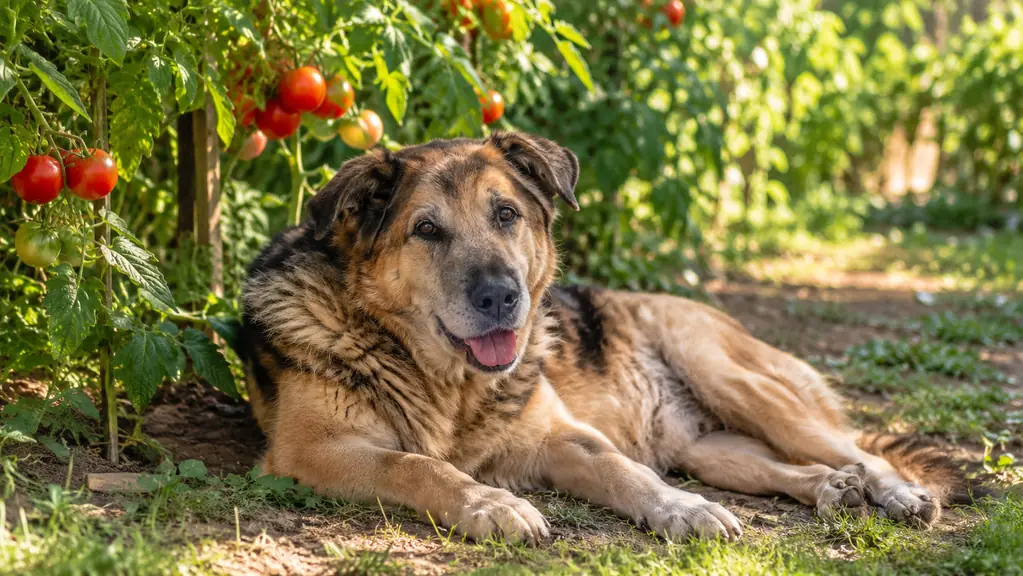
The morning I finally paid attention was a Tuesday in September 2025. Hazel got up off the kitchen floor slower than she had the week before, walked to the back door, and then stood at the bottom of the two brick steps for a good ten seconds before she climbed them. She is a ten year old Golden Retriever, sixty four pounds, and she has been with me since she was eight weeks old. She had never done that before. I did what I usually do when something worries me, which is nothing for a while, and then I called the vet.
I am not a veterinarian, a vet tech or a trainer, and I will not pretend to be one here. I am Colleen Mayhew, a retired church office administrator in Aiken, South Carolina, with a garden, a baking habit and a dog who is slower than she used to be. The fish oil I want to tell you about is Native Pet Omega 3 Fish Oil, the 8 ounce pump bottle, and I have had it since March 2026 after asking Dr. Patel about it first. What follows is the order I would do it in again if I had to start over. None of it is complicated. It is a list of small things done in the right order, and the order is most of the value.
The Bottle That Sits Next to the Kibble Bin
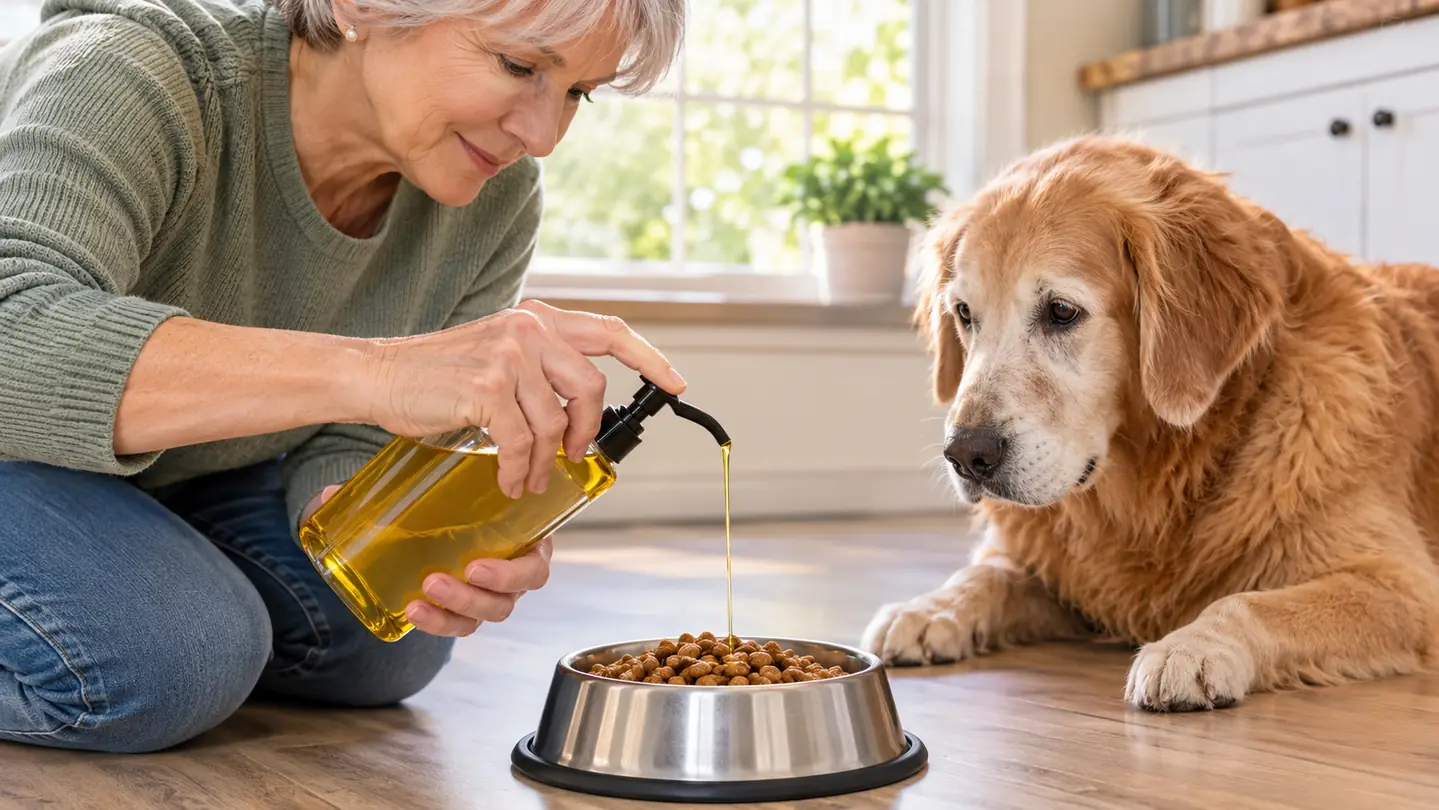
Native Pet Omega 3 Fish Oil comes in an 8 ounce pump bottle, and the listing names two wild-caught fish sources, Alaskan salmon oil and pollock oil, with a note about no fillers. That is the one I pump over Hazel's breakfast. Ask your vet first, then read the label for the serving that matches your dog's weight.
Amazon Check Today's Price on Amazon →Step 1: Call Your Vet Before You Buy Anything
The first thing I did was not order anything. It was make an appointment, bring a list, and let Dr. Patel look at Hazel before I spent a dime on a supplement. I wrote down what I had noticed and how long it had been going on: the slow rise off the kitchen floor, the pause at the bottom of the porch steps, the way she picked the shaded side of the yard on our morning walk. I also wrote down how much she was eating and how she was sleeping, because those were the questions that came first.
That order matters more than any product on this site. An older dog who is slowing down can be slowing down for a long list of reasons, and a bottle of oil is not going to tell you which one it is. When we did get around to supplements, I pulled the listing up on my phone and read her the ingredients, the serving instructions and what the label said the product was for. If your dog takes medication, or has a diagnosed condition, that conversation is not optional. It is the whole thing, and a five minute phone call beats a guess every time.
I also asked what she wanted me to watch for, in both directions. She told me to stop and call if there was any stomach upset. She told me not to change three things in one month, because then you cannot tell what did what. I have followed both of those instructions, and the second one is the reason the fish oil came into this house in March and not in October along with everything else. Slower is not a failure. Slower is how you can still read your own notes six months later and believe them.
Step 2: Read the Label and the Listing Like You Mean It
The words fish oil on the front of a bottle can mean a great many things. I want to know which fish, and I want it named in plain English. The Native Pet listing says wild-caught Alaskan salmon oil and wild-caught pollock oil, and it says those two are what is in the bottle, with the listing making a point about no fillers. That is the kind of sentence a person can actually check. A label that says omega in large letters and proprietary blend in small ones tells me nothing about what I am pouring over my dog's breakfast.
The rest of what I look at is dull and it still matters. The item form is oil, which tells me it goes on food rather than into a treat. The bottle is eight ounces and it comes with a pump, which is kinder to my hands than a dropper and easier to keep clean. There is a date on the packaging and there is storage guidance to follow. I read all of it on my phone in the grocery store parking lot before I ordered, and then I read it again when the box came, because I am the kind of person who reads things twice.
I read the part about what it is for, too, and I read it as the listing talking and not as me. The listing names skin, coat and joints, and it says the omega 3 and 6 fatty acids support a healthy skin barrier and skin comfort. That is fine as far as it goes. It is not a promise about your dog's hips and I will not turn it into one, because I cannot make that promise about Hazel's hips either. I can tell you what the bottle says and what I saw in my own kitchen, and that is where my knowledge stops.
Step 3: Let the Label Do the Math, Not Your Eyeball
This is the step where people get loose, and I understand the temptation. The pump is right there, the dog is right there, and a little extra feels harmless. It is not a good habit to build. The bottle prints a serving chart based on body weight and the listing tells you to check the label for the full dosage guidelines. I read it, I asked Dr. Patel to confirm the amount for Hazel's weight, and then I gave that same amount every single morning and stopped improvising. If you want a number for your dog, get it from your vet and the label. Not from me.
Two things I do not do. I do not double a serving because I missed yesterday, and I do not add a second oil on top because somebody in a Facebook group said it worked for their dog. If you already give a joint chew, or you feed a food that is heavy in fish, tell your vet everything that goes into the bowl, not just the new thing. The whole bowl counts, and your vet is the only one who can look at the whole bowl with your dog standing in front of her.
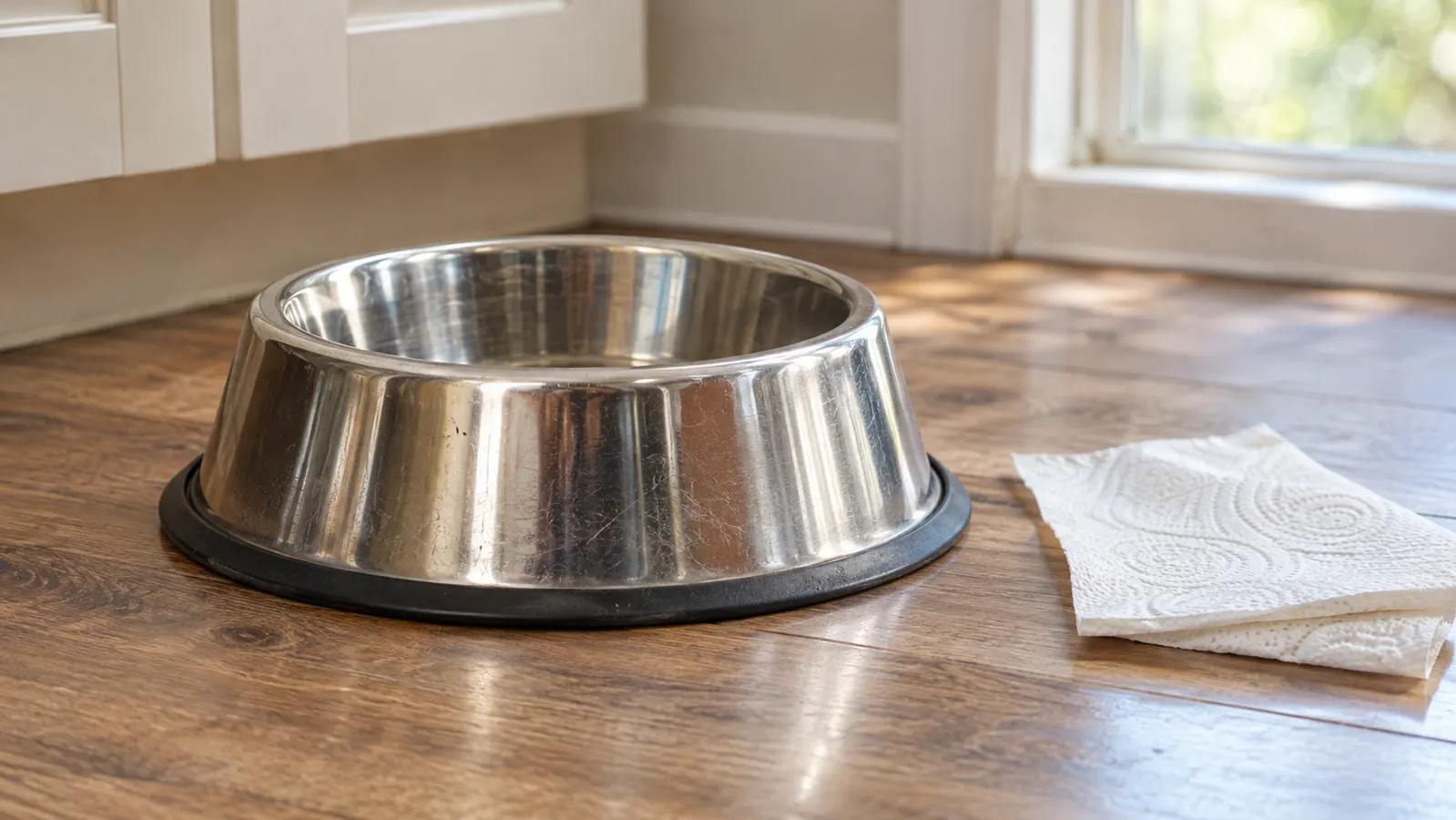
The other half of this step is the pump itself. A pump gives you the same amount each time, which is the entire reason it beats pouring from a jug. I hold the bottle over the bowl, pump it onto the kibble, and wipe the spout with a paper towel before it goes back in the cabinet. If I skip the wipe, it drips, and by Sunday the shelf smells like a fish market. Small thing. Small things are the whole job.
Step 4: Same Bowl, Same Time, Every Morning
Hazel eats breakfast in the kitchen around six thirty, and that is when the oil goes on. Not on the floor, not squirted into her mouth, not on a spoon she can flip over. Over the kibble, in her bowl, before I set it down. She licks the bowl clean, and that is the only review that means anything to me. If your dog turns his nose up at something wet on his kibble, talk to your vet about how to start rather than splitting servings on your own to make it go down easier.
Storage is part of the routine, not a footnote at the bottom of the page. I keep the bottle standing up in a cool, dark cabinet. I put a piece of tape on the side and write the date I opened it, because I will not remember in June what I opened in March, and I check the date on the bottle before I use it. It does not live in the car. It does not live on the windowsill, no matter how handy that seems when I am in a hurry and a dog is staring at me.
Consistency is the part nobody wants to hear, because it makes a poor story. Every morning for eight months is not dramatic. It is a habit. But if you skip four days a week, you are not giving a supplement, you are giving an occasional treat with a smell on it, and you will have no idea afterward what it did or did not do. I keep the pump bottle next to the kibble bin so it is in my hand before I am properly awake. That is the entire system. It works because it is boring.
Step 5: Give It Weeks, and Write Down What You See
The first change I noticed was not her hips. It was her coat. Somewhere around a month in, Hazel's coat looked glossier than it had, especially along her back, and I noticed it while brushing her on the porch. I am telling you that plainly, and I am also telling you I cannot prove it was the oil. She was eating well, the weather had warmed up, and she was getting brushed more often because I was outside in the garden anyway. That is what honest looks like when you are sixty one and you have stopped needing a story to be tidy.
On the joint side I have to be more careful still. By March she had been on the chews for five months and on the bed for two. If getting up got a little easier for her that spring, I cannot separate the oil from the rest of it, and I am not going to pretend I can. What I can tell you is that she is still an older dog who is slower than she was two years ago, and that a cold, damp morning still takes her a while on those porch steps. Nothing fixed her. Some things made the days a little easier to watch.
So keep a note. Not a spreadsheet, just a line on the calendar. Write down what you saw and when you saw it, and write down the days you skipped. If there is stomach upset, stop and call your vet. If nothing changes in a couple of months, that is information too, and it belongs in a conversation with your vet rather than in a bigger bottle bought out of stubbornness. The note is what turns a month of guessing into something you can actually sit down and talk about.
What Else Helps
The oil is one line on a longer list, and I would be lying if I told you it was the most important one. The heaviest thing I do is keep Hazel at a weight Dr. Patel is happy with, because every extra pound is a pound those old joints carry up the porch steps. Her twenty minute walk around the block after breakfast matters more than anything in my cabinet. So does the bed in the corner of the living room, the socks on the laminate, and the fact that I finally stopped letting her scramble on the kitchen floor. Those are not supplements and they are not for sale, and they are most of the difference.
The other thing that helps is not stacking everything at once. I added one thing at a time, months apart, and I asked about each one before I ordered it. That is slower than a cart full of bottles and it is the only way I have ever been able to tell what made a difference. If you are going to try the Native Pet fish oil, try it on its own for a while and keep your notes. Your dog will not mind the wait, and your notes will actually mean something when you read them back.
The first change I saw was her coat, about a month in. I will not pretend it was her hips, because I cannot prove that, and neither can you.
Eight Months In, This Is Still the Bottle Next to the Kibble Bin
It is eight ounces with a pump, the listing names two wild-caught fish sources, and the serving chart lives on the label where it belongs. If you are going to try it, call your vet first, read that label for your dog's weight, and give it weeks before you decide anything. That is what I did. It is what I would tell a friend at my kitchen table, and it is all I have.
Amazon Check Today's Price on Amazon →